


Quick answer
Use OPC 53 or PPC cement from reputed brands, Fe500D TMT steel, and washed M-sand or river sand tested for silt. Material quality decides the life of the building — especially in Mumbai's salt-laden coastal air.
On this page
- Key takeaways
- The short answer
- Key points explained
- How to verify material quality on site
- A quick comparison in words
- Why cutting corners on materials rarely saves real money
- Storage and handling on site
- Sourcing materials from reputed suppliers versus the lowest quote
- Admixtures and special concrete for difficult conditions
- How this applies to your project
- Frequently asked questions
Key takeaways
- PPC for most works
- Fe500D steel
- Tested M-sand
- Corrosion-resistant detailing near the coast
01The short answer
Use OPC 53 or PPC cement from reputed brands, Fe500D TMT steel, and washed M-sand or river sand tested for silt. Material quality decides the life of the building — especially in Mumbai's salt-laden coastal air.
The price difference between a reputed brand and an unbranded alternative is small compared to the cost of repairing a structure where the wrong grade was used.
02Key points explained
PPC (Portland Pozzolana Cement) is suitable for most general construction — plastering, flooring, and even structural RCC in many cases — because its finer particle structure and slower heat of hydration reduce shrinkage cracking and improve long-term durability against chloride and sulphate attack, both relevant along the Mumbai coastline; OPC 53 grade is preferred where early, high strength is needed, such as precast elements or fast-track structural members. Mixing cement types within the same structural pour without an engineer's approval is a common and avoidable site error.
Fe500D TMT steel (the 'D' denotes improved ductility) is the current standard for residential and most commercial RCC work in a seismic zone III city — it combines high yield strength with the ability to deform without sudden failure during an earthquake, which plain Fe500 or older Fe415 grades do not match as well. This ductility is exactly what ductile detailing under IS 13920 is designed to take advantage of, so the steel grade and the detailing standard work together, not independently.
Tested M-sand (manufactured sand) or washed river sand, checked for silt content (a simple jar test — if the settled silt layer exceeds roughly 3–4% of the sand column, the sand should be rejected or washed again) is essential because excess silt weakens the bond between cement paste and aggregate, reducing both strength and durability. Sand quality is one of the easiest things for a site team to compromise on quietly, since a visually similar-looking load can carry very different silt content.
Corrosion-resistant detailing near the coast — adequate concrete cover, often with a corrosion inhibitor admixture or coated rebar in splash-zone or basement elements, and the use of PPC rather than plain OPC in below-ground work — specifically targets the accelerated rebar corrosion that chloride-laden sea air causes faster in Mumbai than in inland cities. A building a few hundred metres from the coast can see corrosion rates meaningfully higher than an identical building built further inland, which is why coastal projects should never simply reuse an inland material specification unchanged.
Taken together, cement grade, steel grade, sand quality and coastal detailing are the four variables that most directly determine whether a building's structural elements last their full intended design life or begin showing distress within a decade — and because all four are specified on paper before construction even begins, verifying them against the structural drawing and the actual material delivered to site is one of the highest-leverage quality checks an owner or site supervisor can perform.
- PPC for most works
- Fe500D steel
- Tested M-sand
- Corrosion-resistant detailing near the coast
03How to verify material quality on site
For cement, check the manufacturing date on each bag (cement loses strength after about three months of storage, faster in humid conditions) and ensure bags are stored off the ground on a raised platform, covered and away from walls. For steel, ask for the mill test certificate for each TMT batch delivered, confirming the grade, and physically check that the bar carries the manufacturer's rolled markings — a simple but effective way to catch substituted or duplicate steel.
For sand, beyond the silt test, check that it is free of organic matter and salt (critical if it originates from a dredged or coastal source) since salt-contaminated sand accelerates rebar corrosion from the inside of the concrete, which cover thickness alone cannot prevent. These three checks together take only a few minutes per delivery but catch the great majority of material-quality shortcuts attempted on a typical site.
04A quick comparison in words
OPC 43 is the lowest grade still in common use, suited to non-structural work like plastering in low-rise buildings; OPC 53 gives the highest early strength and is favoured for precast and fast-track RCC; PPC sits between them on early strength but wins on long-term durability and resistance to chemical attack, making it the general-purpose choice for most residential and coastal construction in the MMR.
Fe415 steel is now largely obsolete for new construction; Fe500 offers higher strength but lower ductility than Fe500D; Fe500D is the recommended default for seismic zone III, and Fe550D (an even higher-ductility, higher-strength variant) is sometimes specified for high-rise towers with heavier load demands.
River sand is becoming harder to source sustainably in many parts of Maharashtra due to environmental restrictions on riverbed sand mining, which is accelerating the shift toward quality-tested M-sand as the default choice for both structural concrete and plastering across new projects in the MMR, including by MumbaiConstructions.
Ready-mix concrete (RMC), batched and mixed at a dedicated plant and delivered to site by transit mixer, is increasingly preferred over site-mixed concrete for exactly this reason — it removes much of the variability in cement, sand and water proportioning that site mixing is prone to, and comes with a batch-level quality record from the supplier that site-mixed concrete generally cannot match unless the site itself runs an unusually disciplined batching process.
05Why cutting corners on materials rarely saves real money
Material cost is typically a modest share of a building's total project cost once labour, finishes, services and land are accounted for, which means the saving from a cheaper, lower-grade material is small relative to the total budget — while the downside, in the form of earlier corrosion, cracking, or a structural member that under-performs its design strength, can run into a far larger repair bill years later. This asymmetry is the core reason experienced contractors treat the material specification as the one place in the budget not worth negotiating down.
06Storage and handling on site
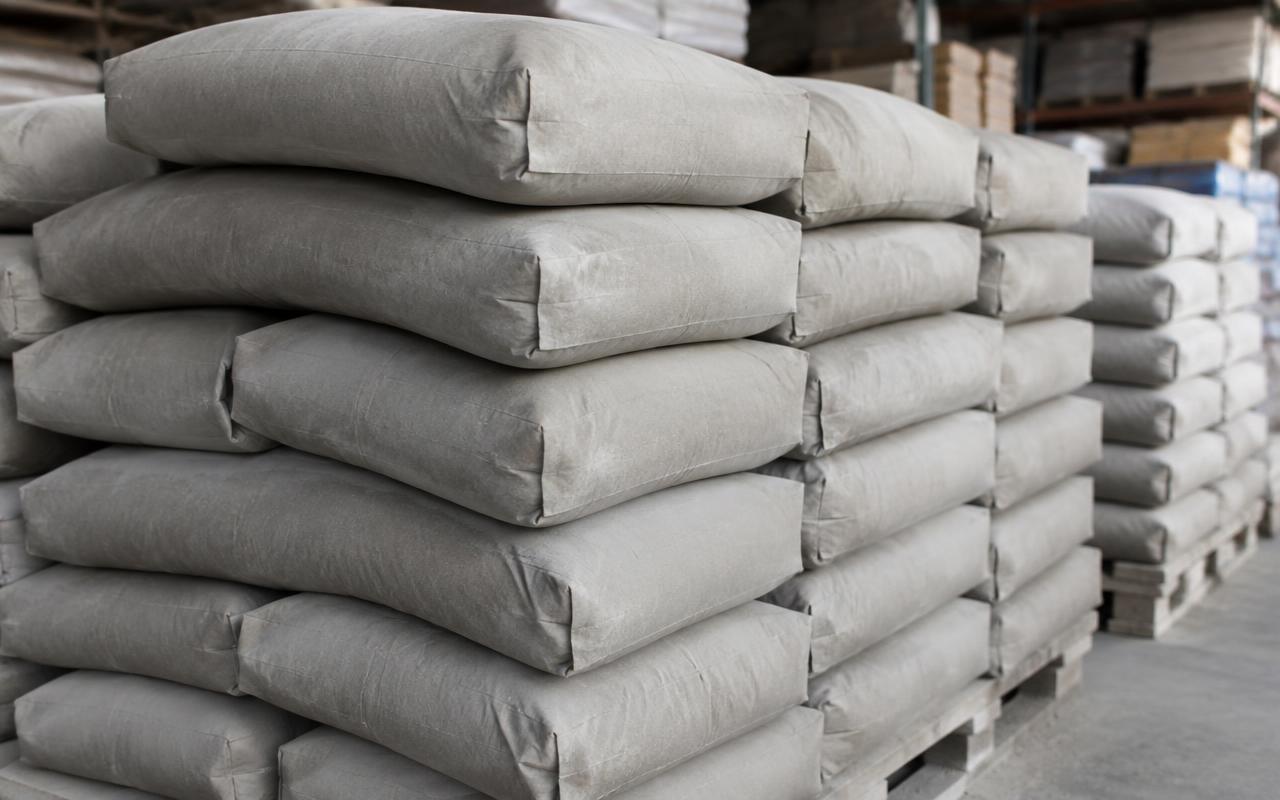
Cement bags stacked more than roughly eight to ten high can crush and partially set at the bottom of the pile from their own weight combined with ambient humidity, so correct stacking height and ventilation in the storage shed matter almost as much as the cement grade itself.
TMT steel left lying directly on bare ground, especially through a monsoon, develops surface rust before it is even used — steel should be stored on raised wooden supports under cover, and any surface rust should be wire-brushed off before the bar is tied into a cage, since light surface rust does not weaken the bar but loose scale can interfere with concrete bonding if left on.
07Sourcing materials from reputed suppliers versus the lowest quote
Reputed cement and steel brands typically carry a small price premium over lesser-known or unbranded alternatives, but that premium buys consistent quality control at the factory — a known brand's bag-to-bag and batch-to-batch variation is far smaller than an unbranded supplier's, which matters because structural design assumes a consistent material strength, not an average across wildly varying batches.
For sand and aggregate specifically, where branding is less meaningful and quality depends more on the specific quarry or crushing unit, building a relationship with a supplier willing to provide test certificates for each delivery (rather than simply claiming the material is 'good quality') is a more reliable way to secure consistent material than switching suppliers based on whoever offers the lowest price that week.
08Admixtures and special concrete for difficult conditions
Beyond the three core materials, admixtures — plasticisers to improve workability without adding extra water, retarders to slow setting time in hot weather, and waterproofing or corrosion-inhibiting admixtures for specific elements — are routinely used to tailor concrete performance to a project's specific conditions, and should be specified deliberately by the structural engineer rather than added informally on site by the mixing crew based on general habit.
For elements in direct, prolonged contact with water or soil — basements, water tanks, foundations in waterlogged soil — a richer concrete mix with a lower water-cement ratio than standard structural concrete is often specified, since durability against water penetration in these elements matters as much as the basic compressive strength the design otherwise targets.
09How this applies to your project
Every plot is different — soil, access, approvals and budget change the right answer. MumbaiConstructions's engineers review your site and drawings and explain the options with costs, so you can decide with confidence.
Get a free site visit in Mumbai, Navi Mumbai & Thane
MumbaiConstructions is a civil construction company and turnkey contractor serving Mumbai, Navi Mumbai & Thane and the wider Mumbai Metropolitan Region since 2009. Share your plot or building details and a project engineer will visit, check feasibility and send a line-item BOQ within 7 working days — no obligation.
Frequently asked questions
Does MumbaiConstructions help with this?
Yes. We offer free site visits, feasibility advice and a line-item BOQ across Mumbai, Navi Mumbai, Thane, Panvel and nearby areas.
Where do you work?
Mumbai Island City and suburbs, Navi Mumbai, Thane, Kalyan-Dombivli, Panvel, Vasai-Virar and surrounding MMR towns.