


Quick answer
General civil works on item-rate or lump-sum contract for owners and developers. To plan civil contractor services well across Mumbai, Navi Mumbai, Thane and Panvel, freeze the scope and drawings, get a line-item BOQ (indicative On BOQ), confirm approvals, sign a contract with stage-linked payments, and insist on documented quality checks at every stage.
On this page
- Key takeaways
- What civil contractor services includes
- Planning checklist
- Common mistakes to avoid
- Quality checks that matter
- Basic, Standard and Premium Civil Work Specifications
- Worked Example: A 12,000 Sq.Ft. Mixed-Use Building Shell
- Material and Vendor Selection on a BOQ Contract
- Warranty and Defect Liability on Civil Contracts
- Frequently asked questions
Key takeaways
- Indicative rate: On BOQ.
- Drawings first, contract second, work third.
- Stage-linked payments protect your money.
- Ask for test reports: cubes, steel, waterproofing.
01What civil contractor services includes
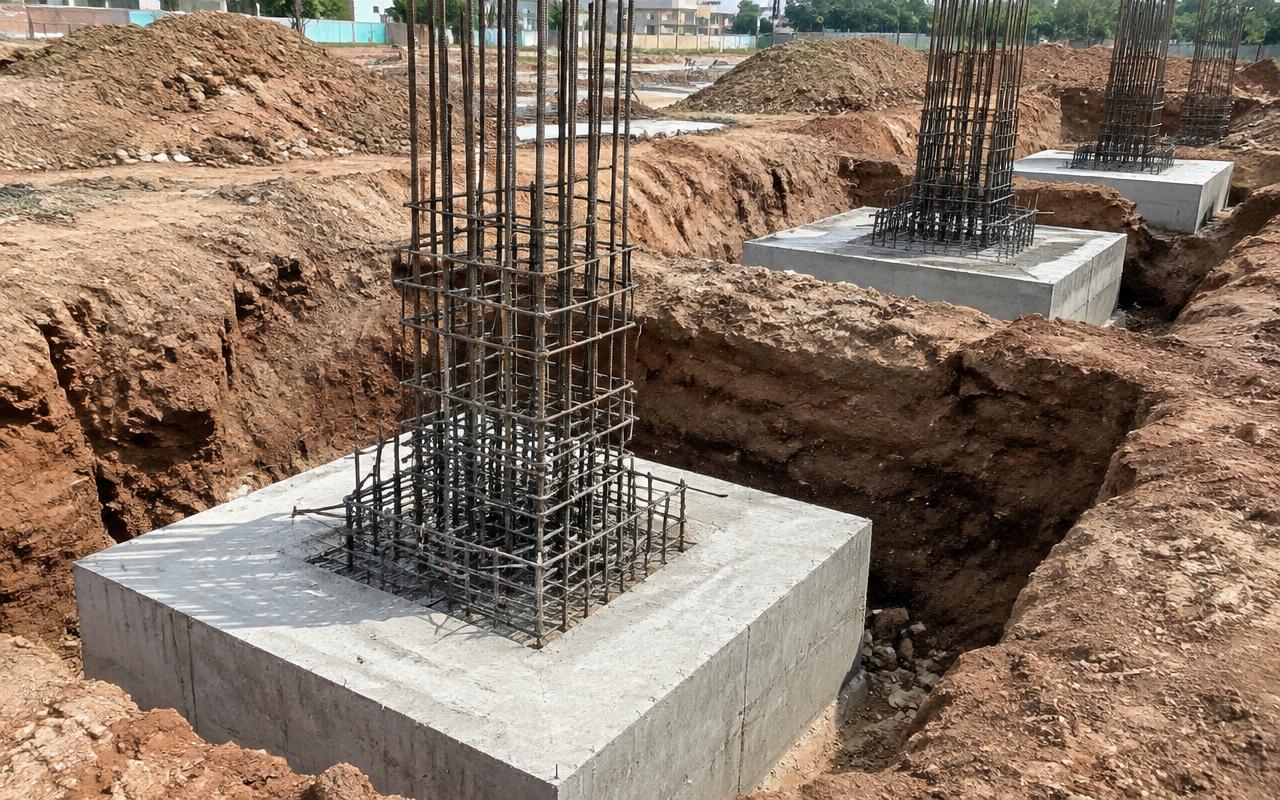
General civil works on item-rate or lump-sum contract for owners and developers.
- Excavation
- Foundation
- Structure
- Masonry
- Plaster
- Finishing
02Planning checklist
Use this before you sign anything:
- Define budget and must-haves
- Soil test and site survey
- Architectural and structural drawings
- Approvals and NOCs
- BOQ with brands and quantities
- Contract with timeline, penalties and defect liability
- Payment schedule linked to stages
03Common mistakes to avoid
Choosing on the lowest sq.ft. rate, starting without structural drawings, skipping waterproofing, changing design mid-way and paying large advances without milestones are the five mistakes we see most often.
04Quality checks that matter
Concrete cube tests, rebar inspection before every pour, curing for at least 7–14 days, ponding tests for waterproofing, and pressure tests for plumbing should all be documented and shared with you.
06Worked Example: A 12,000 Sq.Ft. Mixed-Use Building Shell
A ground-plus-four mixed-use building (retail at ground, residential above) on a BOQ civil contract typically runs 10-12 months from excavation to handover of the civil shell, excluding MEP fit-out and interiors. Excavation and foundation take 5-6 weeks depending on soil conditions and whether piling is needed; the structural frame for five floors runs roughly 16-18 weeks at a floor every 10-12 days once the cycle is established.
Masonry and internal plaster follow floor-by-floor as the frame tops out, typically 3-4 weeks per floor running concurrently across floors with separate gangs, while external plaster and painting wait until the full frame is weathertight. Flooring, door-window frame fixing, and final finishing in the last 6-8 weeks are where most schedule slippage actually happens, since they depend on dozens of smaller trades being sequenced correctly.
Across a project of this size, the single biggest driver of schedule variance is usually not the structural frame at all — it's how well masonry, plaster, and MEP rough-in are sequenced floor by floor. A contractor who starts masonry on the ground floor only after the entire frame tops out wastes months of possible overlap compared to one who releases each floor for masonry as soon as it is structurally cleared, which is one of the first questions worth asking a shortlisted contractor about their sequencing plan.
07Material and Vendor Selection on a BOQ Contract
Because a civil contract bundles many trades, material substitution risk is highest here — a BOQ line item for "TMT steel" or "cement" can be read as a brand or as a grade, and ambiguity favours the contractor unless the BOQ specifies Fe500D steel, OPC 53-grade or PPC cement by IS classification, and M25/M30 concrete grade explicitly rather than leaving it open.
For masonry, AAC blocks need a compatible thin-bed mortar system to realise their insulation benefit — pairing them with ordinary cement-sand mortar at normal brick thickness defeats the purpose and is a common corner-cutting move on tight budgets. Insist on brand-neutral grade specifications in the contract rather than allowing "equivalent" substitutions to be decided unilaterally on site.
A practical safeguard is a materials approval register: before any bulk procurement, the contractor submits the specific grade/specification for each major material line against the BOQ for the owner's or architect's written sign-off, with delivery challans cross-checked against that approved register later. This single discipline catches most substitution attempts before the material is already built into a wall, which is far too late to contest it.
08Warranty and Defect Liability on Civil Contracts
A standard civil works contract carries a defect-liability period of 12-24 months post-handover covering plaster cracking, flooring defects, and masonry issues, with structural elements (if included in the same contract) carrying a longer 5-10 year structural warranty tracked separately. Waterproofing, electrical, and plumbing sub-works typically carry their own shorter warranties from the specialist sub-contractor, which should be explicitly listed in the final handover document rather than assumed to be covered by the main civil warranty.
Retention money — commonly 5-10% of the contract value held back for 6-12 months after handover — is the practical mechanism that makes defect liability enforceable; releasing full payment at handover removes most of the contractor's incentive to return for punch-list items.
It is worth distinguishing settling cracks from structural cracks explicitly in the handover documentation, since the two look similar to a layperson but carry very different warranty implications — hairline plaster cracks from normal curing shrinkage are routine and typically excluded from claims, while cracks that run through masonry at a consistent angle or widen over time point to a structural or foundation issue and should trigger the longer structural warranty instead of being dismissed as cosmetic.
A practical habit worth adopting at handover is a joint walkthrough where both the owner and the contractor physically inspect and photograph every room, noting the condition of plaster, flooring, and fittings before the defect-liability clock starts. Without this shared baseline, a complaint raised eight months later about a crack or a loose tile can turn into an argument over whether the defect existed at handover or developed afterward, which a dated photographic record resolves in minutes rather than days.
Get a free site visit in Mumbai, Navi Mumbai & Thane
MumbaiConstructions is a civil construction company and turnkey contractor serving Mumbai, Navi Mumbai & Thane and the wider Mumbai Metropolitan Region since 2009. Share your plot or building details and a project engineer will visit, check feasibility and send a line-item BOQ within 7 working days — no obligation.
Frequently asked questions
How much does civil contractor services cost in Mumbai?
Indicatively On BOQ, depending on specification and site conditions.
Can you do only the civil work?
Yes — we work turnkey or on a civil-only or item-rate basis with your architect.