


Quick answer
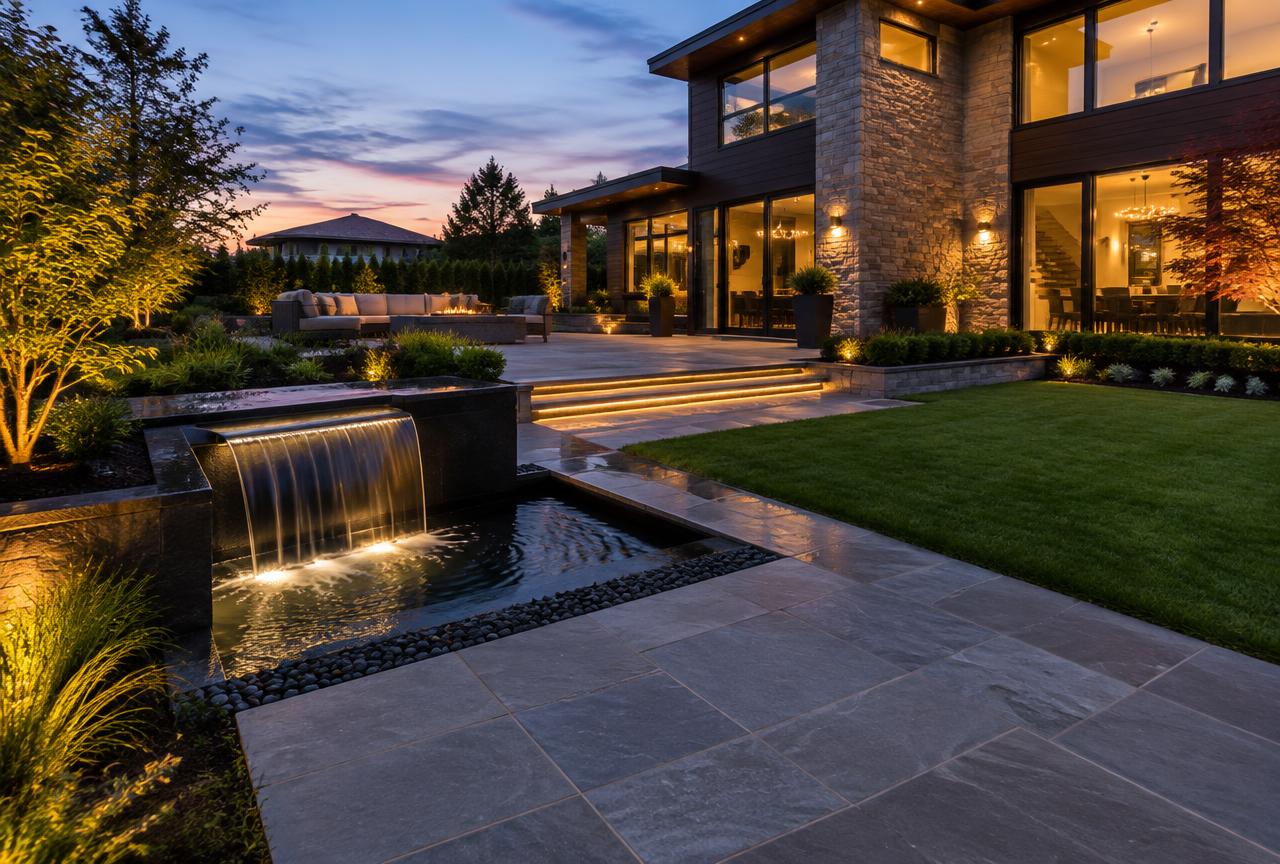
Good landscaping combines native plants, efficient irrigation, stone hardscape and storm-water drainage — especially important on coastal and low-lying sites.
On this page
- Key takeaways
- The short answer
- Key points explained
- Designing for Mumbai's monsoon-to-dry-season swing
- Hardscape material choices and maintenance
- Stormwater management for coastal and low-lying sites
- Phasing landscaping with construction
- Budgeting for landscaping on a villa or township project
- Ongoing maintenance responsibility in a society setting
- Lighting and safety in landscaped common areas
- Coordinating landscaping with the civil contractor's handover
- How this applies to your project
- Frequently asked questions
Key takeaways
- Native plants
- Drip irrigation
- Stone pathways
- Drainage first
01The short answer
Good landscaping combines native plants, efficient irrigation, stone hardscape and storm-water drainage — especially important on coastal and low-lying sites.
In the Mumbai region's climate — heavy monsoon followed by long dry stretches — landscaping that ignores drainage or plant suitability typically fails within its first year regardless of how well it was designed on paper.
02Key points explained
Native plants — species already adapted to Mumbai's coastal humidity, monsoon intensity and soil conditions, such as various flowering and shade trees and groundcovers used regionally rather than imported ornamentals bred for drier or temperate climates — survive with far less water, fertiliser and pest management than non-native alternatives, and are increasingly the default recommendation for both villa gardens and township green spaces.
Drip irrigation — delivering water directly to the root zone through a network of emitters rather than broadcast sprinklers — cuts water consumption significantly compared to open spraying, and is particularly valuable in townships where a central irrigation system has to serve large common green areas economically over the long term.
Stone pathways and hardscape — using regionally available stone (such as kota, cuddapah or local basalt-based paving) for walkways, seating areas and plazas — need to be laid on a properly compacted and drained base, since stone paving on poorly prepared ground settles unevenly and becomes a tripping hazard and a standing-water trap within a monsoon or two.
Planning drainage first, before any planting or hardscape layout is finalised, is the single most important discipline in Mumbai-region landscaping — land that looks flat can still have subtle low points that collect water, and a landscape plan that does not grade these areas toward a drainage outlet will see waterlogged lawns and dying plant beds every monsoon regardless of what species were chosen.
All four of these choices are really responses to the same regional reality — intense, concentrated monsoon rainfall followed by a long dry period — and a landscape that gets drainage and plant selection right for this specific climate pattern needs markedly less water, less replanting and less corrective repair over its life than one designed around generic, climate-neutral landscaping assumptions.
- Native plants
- Drip irrigation
- Stone pathways
- Drainage first
03Designing for Mumbai's monsoon-to-dry-season swing
The region's climate swings between intense monsoon rainfall (roughly June to September) and a long, largely dry remainder of the year, which means a landscape design has to handle both extremes: surface and sub-surface drainage sized for peak monsoon intensity, paired with an irrigation system (commonly drip, supplemented by sprinklers for lawns) capable of sustaining plantings through the dry months.
Species selection should specifically favour plants tolerant of both waterlogged roots during monsoon and dry stress later in the year, since many attractive ornamental species fail precisely because they cannot handle this combination of extremes within a single annual cycle.
04Hardscape material choices and maintenance
Natural stone paving generally outperforms concrete pavers or tiles in outdoor durability and slip resistance when properly finished, but costs more and needs correct jointing (either mortar-filled or sand-swept, depending on design intent) to prevent weed growth and water infiltration under the paving. Concrete pavers cost less and install faster, suiting large township common areas where budget per square metre matters more than the premium look of natural stone.
Permeable paving options, which allow rainwater to filter through the paving itself into the ground below rather than running off entirely, are gaining use in township driveways and parking courts specifically because they reduce the load on the stormwater drainage system during intense monsoon downpours, at a modest premium over standard impermeable paving.
05Stormwater management for coastal and low-lying sites
On coastal and low-lying plots across the MMR, where the water table sits close to the surface and monsoon runoff is heavy, landscape drainage design typically combines graded surface flow toward collection points, French drains or gravel-filled trenches in planting beds to manage sub-surface water, and connection into the broader site or township stormwater system — ideally coordinated with any rainwater harvesting system on the same site so that collected water is put to use rather than simply discharged.
Retaining a buffer of permeable, planted ground rather than paving an entire site edge to edge also helps absorb peak monsoon flows before they reach the stormwater system, which is why many township landscape plans deliberately keep a meaningful share of open, planted ground even where additional paved area would otherwise be easy to add.
06Phasing landscaping with construction
Hardscape and drainage infrastructure should generally be installed before final planting, since heavy construction vehicle movement and material storage can compact soil and damage young plants if the sequence is reversed. Experienced landscape contractors typically hold planting back to the final weeks of a project specifically to avoid this damage, even when the hardscape and irrigation lines are finished much earlier in the schedule.
07Budgeting for landscaping on a villa or township project
Landscaping is frequently the line item most aggressively cut when a construction budget runs over, which is a false economy on any project where outdoor space is part of the sale or living value — a society or villa with unfinished, bare-earth common areas at handover sends a very different impression to residents and buyers than one with even a modest, well-drained and well-planted landscape.
A reasonable rule of thumb used by many developers is to allocate a defined percentage of the overall project cost specifically to landscaping and hardscape from the start, rather than treating it as whatever remains after every other trade has been paid — this protects the landscape scope from being quietly descoped as the project nears completion and the budget tightens.
08Ongoing maintenance responsibility in a society setting
Common-area landscaping in a society needs an assigned, funded maintenance plan from day one — pruning, irrigation system checks, pest management and periodic replanting — since landscaping that looks excellent at handover but has no maintenance budget attached typically deteriorates within a year or two, undermining the value the original design investment was meant to deliver.
Societies that build landscaping maintenance explicitly into the annual maintenance charge calculation, rather than treating it as a discretionary expense approved year to year, tend to keep their common green areas in noticeably better condition over the long term than those that only fund landscaping reactively once it has already visibly declined.
09Lighting and safety in landscaped common areas
Outdoor lighting design for pathways, seating areas and planted zones is often treated as a purely decorative afterthought, but adequate, well-positioned lighting is also a basic safety requirement for residents using common areas after dark, and should be planned alongside the hardscape and planting layout rather than added as a final decorative touch once the landscape design is otherwise complete.
Lighting fixtures used outdoors in Mumbai's humid, monsoon-exposed conditions need an appropriate ingress-protection rating to resist water and dust, and fixtures not rated for sustained outdoor exposure commonly fail within one or two monsoon seasons — a detail worth specifically confirming in the landscaping contract rather than assuming any lighting fixture sold for 'outdoor use' is adequately rated for this particular climate.
10Coordinating landscaping with the civil contractor's handover
Landscaping contracts frequently sit with a different vendor from the main civil contractor, which means final grading levels, drainage outlet positions and any buried utility lines need to be clearly communicated at the civil-to-landscape handover, since a landscape contractor working from an incomplete or outdated site plan can easily design a planting layout that conflicts with a buried service line or an as-built drainage route that differs from the original drawing.
A short joint walkthrough between the outgoing civil team and the incoming landscape contractor, specifically to confirm final ground levels and utility positions on site rather than relying only on drawings, is a simple step that prevents a meaningful share of the landscaping rework disputes that otherwise surface once planting has already begun.
11How this applies to your project
Every plot is different — soil, access, approvals and budget change the right answer. MumbaiConstructions's engineers review your site and drawings and explain the options with costs, so you can decide with confidence.
Get a free site visit in Mumbai, Navi Mumbai & Thane
MumbaiConstructions is a civil construction company and turnkey contractor serving Mumbai, Navi Mumbai & Thane and the wider Mumbai Metropolitan Region since 2009. Share your plot or building details and a project engineer will visit, check feasibility and send a line-item BOQ within 7 working days — no obligation.
Frequently asked questions
Does MumbaiConstructions help with this?
Yes. We offer free site visits, feasibility advice and a line-item BOQ across Mumbai, Navi Mumbai, Thane, Panvel and nearby areas.
Where do you work?
Mumbai Island City and suburbs, Navi Mumbai, Thane, Kalyan-Dombivli, Panvel, Vasai-Virar and surrounding MMR towns.