


Quick answer
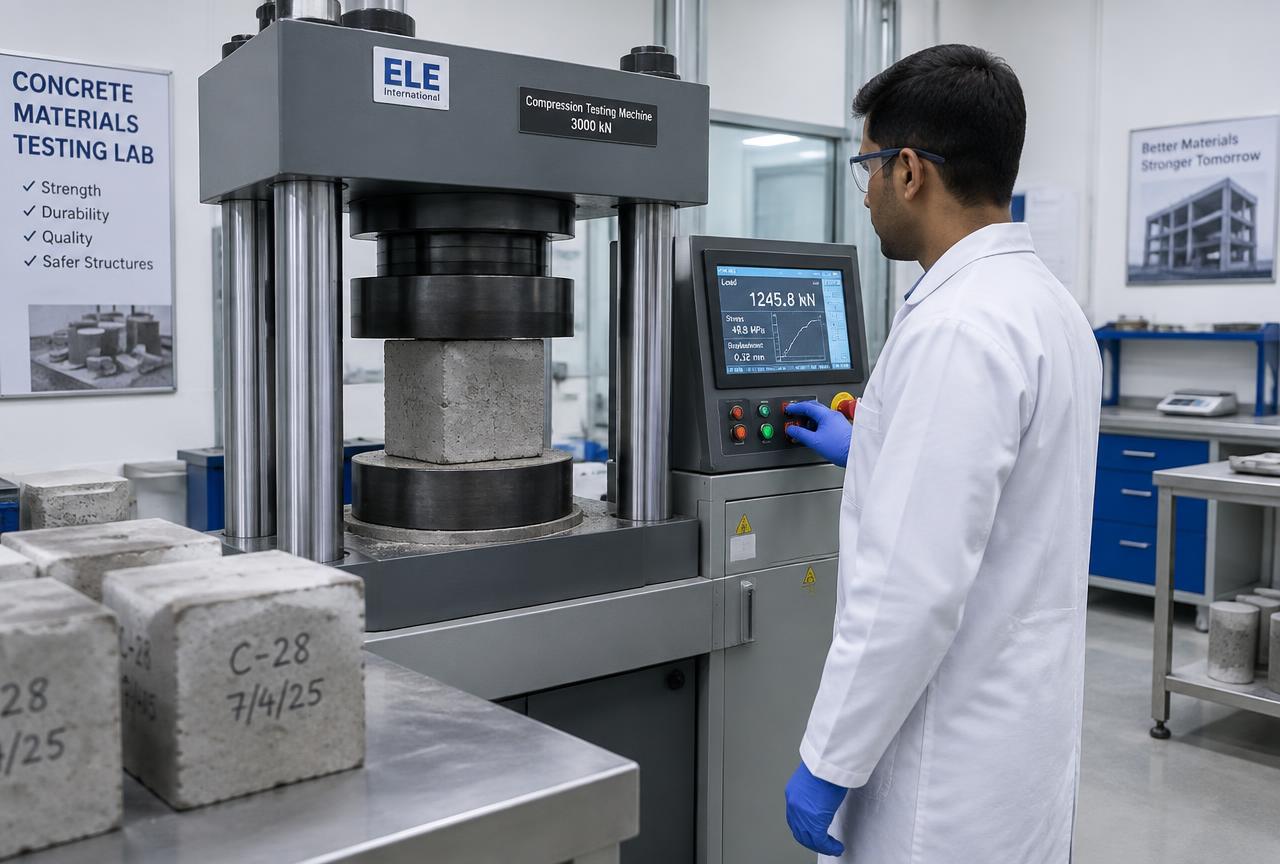
Concrete cube, steel and soil testing with documented QA records. To plan quality testing & audits well across Mumbai, Navi Mumbai, Thane and Panvel, freeze the scope and drawings, get a line-item BOQ (indicative Per test), confirm approvals, sign a contract with stage-linked payments, and insist on documented quality checks at every stage.
On this page
- Key takeaways
- What quality testing & audits includes
- Planning checklist
- Common mistakes to avoid
- Quality checks that matter
- Standard, Enhanced and Comprehensive Testing Regimes Compared
- Worked Example: Testing Program for a G+7 Residential Tower
- Choosing a Testing Lab and Equipment Standard
- Site-Readiness Checklist for a Quality Testing Program
- Frequently asked questions
Key takeaways
- Indicative rate: Per test.
- Drawings first, contract second, work third.
- Stage-linked payments protect your money.
- Ask for test reports: cubes, steel, waterproofing.
01What quality testing & audits includes
Concrete cube, steel and soil testing with documented QA records.
- Soil test
- Cube test
- Rebar test
- Core test
- NDT
- Reports
02Planning checklist
Use this before you sign anything:
- Define budget and must-haves
- Soil test and site survey
- Architectural and structural drawings
- Approvals and NOCs
- BOQ with brands and quantities
- Contract with timeline, penalties and defect liability
- Payment schedule linked to stages
03Common mistakes to avoid
Choosing on the lowest sq.ft. rate, starting without structural drawings, skipping waterproofing, changing design mid-way and paying large advances without milestones are the five mistakes we see most often.
04Quality checks that matter
Concrete cube tests, rebar inspection before every pour, curing for at least 7–14 days, ponding tests for waterproofing, and pressure tests for plumbing should all be documented and shared with you.
05Standard, Enhanced and Comprehensive Testing Regimes Compared
A standard testing regime on a typical residential project covers mandatory concrete cube testing at 7 and 28 days for each major pour, with soil investigation done once before foundation design. Enhanced testing adds steel tensile and bend testing on each batch of reinforcement delivered (rather than relying on the mill certificate alone), and periodic rebound hammer checks on cast elements as a quick, non-destructive cross-check against cube results.
Comprehensive testing regimes, typical on larger or higher-risk projects, add core sampling from actual cast elements (destructive but definitive, used selectively rather than routinely), full NDT suites including ultrasonic pulse velocity for internal void detection, and third-party independent lab verification rather than relying solely on the contractor's own testing — this last point matters most where there's any dispute risk between owner and contractor over quality.
The incremental cost of moving from standard to enhanced testing is usually small relative to the project's total value, since testing itself is a minor line item compared to materials and labour — which is why enhanced testing is often the easiest upgrade to justify on any project where the owner has even mild uncertainty about the contractor's own quality discipline.
Testing frequency should also scale with element criticality rather than being applied uniformly across a project — columns and transfer beams carrying cumulative load from floors above genuinely warrant closer scrutiny than, say, a non-load-bearing partition wall slab, and a testing budget spent disproportionately on the highest-consequence elements is usually a better use of resources than spreading the same budget evenly and thinly across everything.
06Worked Example: Testing Program for a G+7 Residential Tower
For a G+7 residential tower, a realistic testing program runs throughout construction rather than as a one-time event: soil investigation with multiple bore holes before foundation design (2-3 weeks, done once), followed by cube testing for every significant pour — typically meaning several sets of cubes per floor given multiple pours for columns, beams, and slabs, with both 7-day (indicative) and 28-day (decisive) results tracked in a running register.
Steel testing samples each delivered batch for tensile strength and bend properties against the mill certificate, flagging any discrepancy before the steel is used rather than after. Rebar cover and spacing checks using a cover meter happen before each pour as a routine site QA step rather than a separate "test," and NDT (rebound hammer, and ultrasonic pulse velocity where results are ambiguous) is typically run on a sample of elements per floor as an ongoing cross-check against the cube results, with core sampling reserved only for elements where results genuinely conflict.
Across a project of this height, the testing register itself becomes a sizeable document by handover — potentially hundreds of individual cube results, dozens of steel batch certificates, and NDT reports for sampled elements on every floor — and organising this register by floor and element from day one, rather than reconstructing it at project closure, is what makes it actually useful for a future structural audit or warranty claim.
07Choosing a Testing Lab and Equipment Standard
An NABL-accredited (or equivalent recognised) testing laboratory is worth insisting on for any dispute-sensitive or high-value project, since accredited lab results carry far more weight if a quality disagreement ever needs third-party arbitration. For routine cube testing, consistency of the testing machine's calibration matters more than which lab is used — an uncalibrated compression testing machine can under- or over-report strength by a meaningful margin, invalidating results that look perfectly normal on paper.
For soil investigation specifically, the number and depth of bore holes should match the actual building footprint and height rather than following a generic minimum — a G+7 tower needs materially deeper and more numerous bore holes than a G+1 bungalow, and a soil report done for a smaller structure on the same plot should never be reused for a larger one.
Asking a prospective lab for its calibration certificate and accreditation scope before engaging it is a simple, underused check — a lab's accreditation can cover some tests but not others, and confirming this upfront avoids discovering mid-project that a key test the owner assumed was accredited actually wasn't.
A chain-of-custody discipline for samples — recording who collected each cube or steel sample, when, and from which specific pour or batch, with that record travelling with the sample to the lab — is what makes a test result defensible later. A result with no clear record of which element it actually represents is of limited practical use in a dispute, however accurate the lab's reading itself was.
08Site-Readiness Checklist for a Quality Testing Program
A testing program is only as reliable as the arrangements made for it before construction starts, so these items are worth settling at the outset rather than mid-project when a gap in the testing record is far harder to retroactively fill.
- Testing frequency and lab(s) agreed in writing before construction starts, not negotiated after a dispute arises over a questionable result
- Cube-making and curing facility available on site, with a dedicated curing tank rather than ad-hoc water storage that doesn't maintain consistent temperature
- Sample retention protocol agreed — failed or borderline cube results retained and retested, not discarded before the cause of a low result can be investigated
- Steel delivery inspection process set up so mill certificates are checked against the actual batch before use, with mismatches flagged before the steel goes into formwork
- Cover meter and rebound hammer available on site for routine checks, not only brought in for formal testing events, so spot checks can happen as part of normal daily supervision
- Test report format and distribution agreed — who receives copies, and how quickly after each test, so results feed back into decisions while they're still actionable
Get a free site visit in Mumbai, Navi Mumbai & Thane
MumbaiConstructions is a civil construction company and turnkey contractor serving Mumbai, Navi Mumbai & Thane and the wider Mumbai Metropolitan Region since 2009. Share your plot or building details and a project engineer will visit, check feasibility and send a line-item BOQ within 7 working days — no obligation.
Frequently asked questions
How much does quality testing & audits cost in Mumbai?
Indicatively Per test, depending on specification and site conditions.
Can you do only the civil work?
Yes — we work turnkey or on a civil-only or item-rate basis with your architect.