


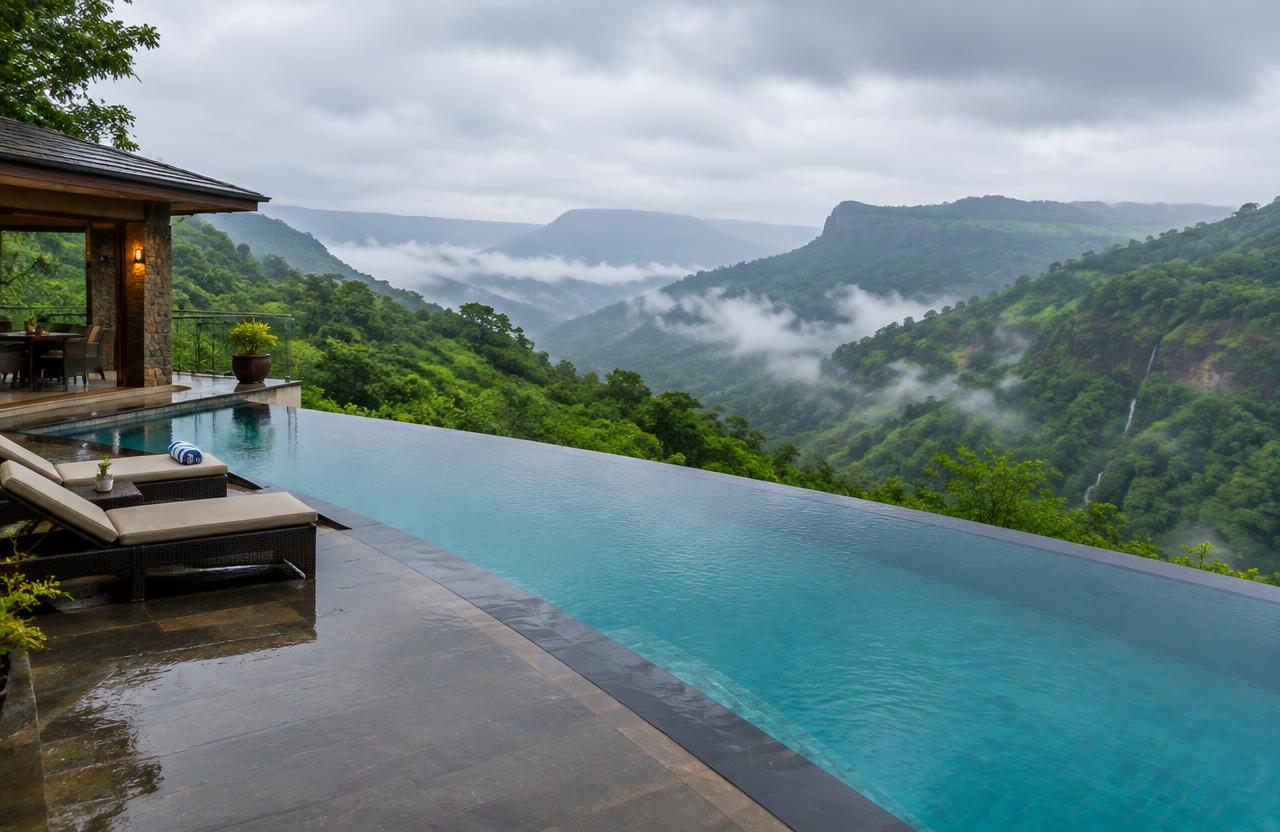
Quick answer
RCC infinity and skimmer pools with filtration, tiling and decks. To plan swimming pool construction well across Mumbai, Navi Mumbai, Thane and Panvel, freeze the scope and drawings, get a line-item BOQ (indicative ₹6,000 – ₹15,000 / sq.ft. water area), confirm approvals, sign a contract with stage-linked payments, and insist on documented quality checks at every stage.
On this page
- Key takeaways
- What swimming pool construction includes
- Planning checklist
- Common mistakes to avoid
- Quality checks that matter
- Specification tiers for swimming pool construction
- Worked example: a 25 sq.m. (roughly 270 sq.ft.) residential pool with deck
- Material and vendor selection for pool construction
- Pre-start checklist for swimming pool projects
- Warranty terms typical for swimming pool construction
- Frequently asked questions
Key takeaways
- Indicative rate: ₹6,000 – ₹15,000 / sq.ft. water area.
- Drawings first, contract second, work third.
- Stage-linked payments protect your money.
- Ask for test reports: cubes, steel, waterproofing.
01What swimming pool construction includes
RCC infinity and skimmer pools with filtration, tiling and decks.
- Pool design
- RCC shell
- Waterproofing
- Filtration plant
- Tiling
- Deck
02Planning checklist
Use this before you sign anything:
- Define budget and must-haves
- Soil test and site survey
- Architectural and structural drawings
- Approvals and NOCs
- BOQ with brands and quantities
- Contract with timeline, penalties and defect liability
- Payment schedule linked to stages
03Common mistakes to avoid
Choosing on the lowest sq.ft. rate, starting without structural drawings, skipping waterproofing, changing design mid-way and paying large advances without milestones are the five mistakes we see most often.
04Quality checks that matter
Concrete cube tests, rebar inspection before every pour, curing for at least 7–14 days, ponding tests for waterproofing, and pressure tests for plumbing should all be documented and shared with you.
05Specification tiers for swimming pool construction
At basic tier, a pool is built as an RCC shell with M25 concrete, a standard PU or APP waterproofing membrane, ceramic or standard pool tiling, and a basic sand or cartridge filtration system sized to the pool's volume. This suits a straightforward rectangular skimmer pool for residential or small-scale use.
At standard tier, the pool gets better tiling (glass mosaic or vitrified pool tile with anti-skid coping), an upgraded filtration system with better flow-rate margin above minimum requirement, basic pool lighting, and a proper deck with drainage sloped away from the pool edge. Shape complexity (curves, varying depths) is also more common at this tier, requiring more detailed formwork.
At premium tier, expect an infinity or vanishing-edge design requiring a balancing tank and more complex structural engineering at the edge detail, natural stone decking, integrated spa or jacuzzi sections, automated pool-cover systems, and advanced filtration with UV or ozone treatment for reduced chemical use. The waterproofing and structural shell design is where material quality matters most across all tiers — a pool is a permanently wet structure under constant hydrostatic pressure, and corners cut here show up as leaks that are expensive to trace and repair once tiled.
06Worked example: a 25 sq.m. (roughly 270 sq.ft.) residential pool with deck
Take a 25 sq.m. skimmer-type residential pool with a surrounding deck, contracted at ₹8,500/sq.ft. of water area, a contract value of roughly ₹23 lakh including the deck and filtration plant room. Design, including structural engineering for the RCC shell and coordination with the site's soil conditions, typically takes 2–3 weeks.
Excavation and the RCC shell, including the mandatory curing period before waterproofing can be applied, typically take 5–6 weeks — concrete needs to cure adequately before waterproofing membrane application, and rushing this step is a common cause of early membrane failure.
Waterproofing membrane application and testing (a water-retention test to confirm no leakage before tiling begins) typically take 1–2 weeks and should never be skipped, since finding a leak after tiling means breaking tiles to access and repair the membrane. Tiling, filtration plant installation and plumbing take a further 3–4 weeks, and deck construction runs in parallel. Total programme: roughly 12–14 weeks from design to a pool ready for water filling and final commissioning.
On a pool contract of this size, milestones typically run around 15% at design and structural sign-off, 30% on completion and curing of the RCC shell, 20% released only after the waterproofing membrane passes its water-retention test — a milestone that should never be skipped or bundled with shell completion — 25% on tiling and filtration-plant installation, and the remaining 10% on final commissioning and handover. Structuring the waterproofing milestone as a distinct, test-verified release rather than folding it into shell or tiling payments gives the owner real leverage to insist the retention test is actually performed before tiling conceals the membrane.
07Material and vendor selection for pool construction
The RCC shell should use a waterstop at all construction joints (where one concrete pour meets the next) since joints are the most common leak point in a cast pool shell — ask specifically whether waterstops are included in the shell specification, since this detail is easy to omit without visibly affecting the finished look.
For waterproofing, a PU or APP membrane system rated specifically for permanent water immersion (not a generic terrace waterproofing product) is the correct specification, and the water-retention test mentioned above should be a contractual milestone with a sign-off, not an informal check.
For filtration, size the pump and filter to the pool's actual turnover-rate requirement (how many hours to fully recirculate the pool volume) rather than accepting a generic 'suitable for residential pools' claim — undersized filtration leads to persistent water-clarity and algae problems regardless of how well the pool itself is built.
08Pre-start checklist for swimming pool projects
Pool construction carries site-readiness requirements distinct from building construction, centred on structural safety and water management.
- Soil investigation at the actual pool location, since pool loads and excavation behaviour differ from building foundation loads
- Pool location checked for adequate setback from any adjacent building foundation to avoid excavation-related settlement risk
- Groundwater table level checked, since a high water table can cause an empty pool shell to float or crack during construction if not properly weighted or dewatered
- Drainage plan for the pool's backwash water and deck runoff confirmed with the local authority or society, since backwash water needs proper disposal, not informal discharge
- Filtration plant room location and electrical supply point finalised before shell construction, since retrofitting plant-room plumbing connections into a finished shell is disruptive
- Access for construction equipment (excavator, concrete pump) confirmed given the pool's plot location
- Child-safety fencing or cover requirements decided at design stage if relevant for the household
09Warranty terms typical for swimming pool construction
The RCC shell typically carries a 5–7 year warranty against structural cracking, and the waterproofing membrane typically carries a matching or slightly shorter warranty (commonly 5 years) against leakage — ask that both warranties are documented together, since a shell crack and a membrane leak often have related causes and a split warranty document can create ambiguity about which applies.
Tiling typically carries a 2–3 year warranty against tile or grout failure in the specific context of permanent water exposure, which is shorter than standard building-tile warranty given the harsher operating condition. Filtration plant equipment carries its own manufacturer warranty (commonly 1–2 years) separate from the installation workmanship warranty.
Because a pool's water-retention test is the clearest evidence of waterproofing quality at handover, keep the signed test record as part of the warranty documentation — it establishes a clear baseline if a leak dispute arises later.
Get a free site visit in Mumbai, Navi Mumbai & Thane
MumbaiConstructions is a civil construction company and turnkey contractor serving Mumbai, Navi Mumbai & Thane and the wider Mumbai Metropolitan Region since 2009. Share your plot or building details and a project engineer will visit, check feasibility and send a line-item BOQ within 7 working days — no obligation.
Frequently asked questions
How much does swimming pool construction cost in Mumbai?
Indicatively ₹6,000 – ₹15,000 / sq.ft. water area, depending on specification and site conditions.
Can you do only the civil work?
Yes — we work turnkey or on a civil-only or item-rate basis with your architect.