


Quick answer
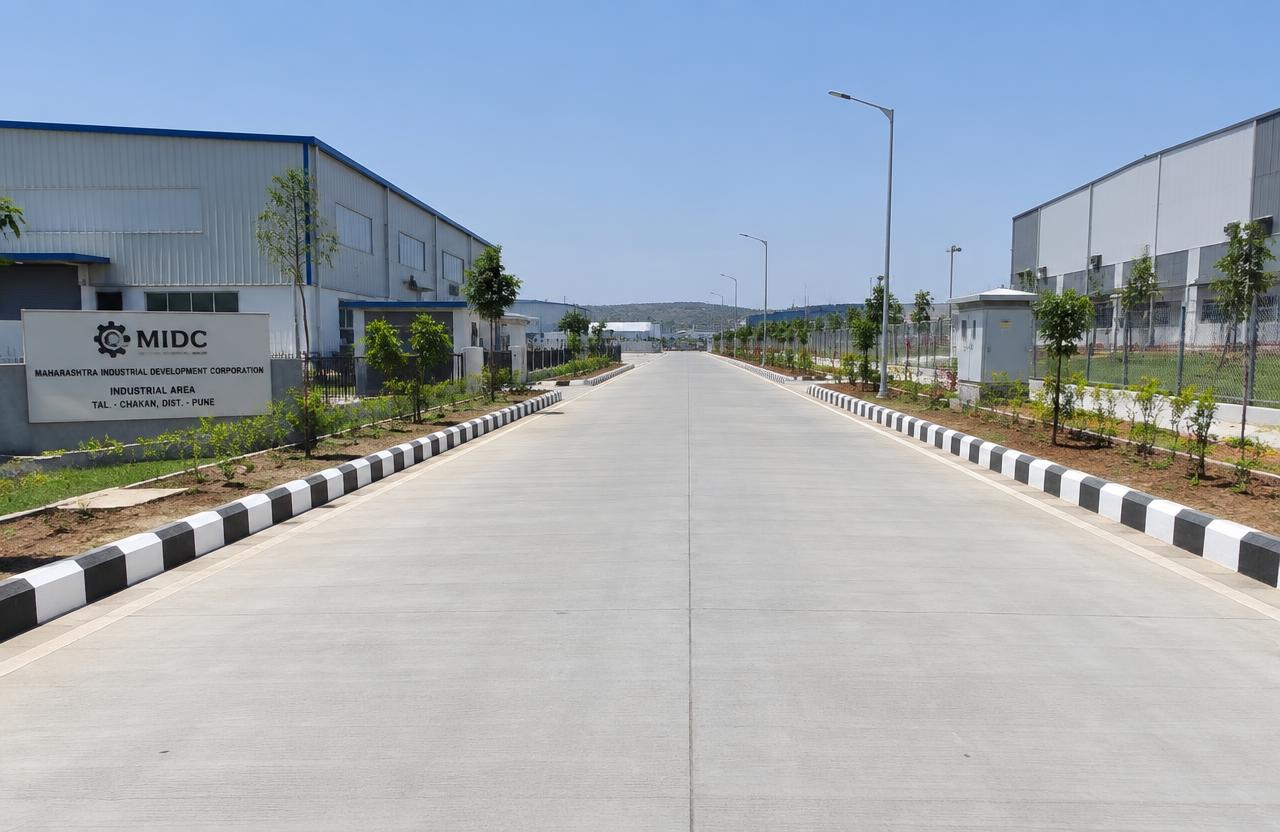
PQC and RCC roads, driveways and paver blocks for estates and plants. To plan concrete road & paving well across Mumbai, Navi Mumbai, Thane and Panvel, freeze the scope and drawings, get a line-item BOQ (indicative ₹1,800 – ₹3,800 / sq.m.), confirm approvals, sign a contract with stage-linked payments, and insist on documented quality checks at every stage.
On this page
- Key takeaways
- What concrete road & paving includes
- Planning checklist
- Common mistakes to avoid
- Quality checks that matter
- Basic, Standard and Premium PQC and Paving Specifications
- Material Selection for PQC and Paver Installations
- Site-Readiness Checklist Before Paving Work
- Warranty on Concrete Paving and Driveways
- Frequently asked questions
Key takeaways
- Indicative rate: ₹1,800 – ₹3,800 / sq.m..
- Drawings first, contract second, work third.
- Stage-linked payments protect your money.
- Ask for test reports: cubes, steel, waterproofing.
01What concrete road & paving includes
PQC and RCC roads, driveways and paver blocks for estates and plants.
- Sub-base
- PQC
- Joints
- Paver blocks
- Kerbs
- Drains
02Planning checklist
Use this before you sign anything:
- Define budget and must-haves
- Soil test and site survey
- Architectural and structural drawings
- Approvals and NOCs
- BOQ with brands and quantities
- Contract with timeline, penalties and defect liability
- Payment schedule linked to stages
03Common mistakes to avoid
Choosing on the lowest sq.ft. rate, starting without structural drawings, skipping waterproofing, changing design mid-way and paying large advances without milestones are the five mistakes we see most often.
04Quality checks that matter
Concrete cube tests, rebar inspection before every pour, curing for at least 7–14 days, ponding tests for waterproofing, and pressure tests for plumbing should all be documented and shared with you.
06Material Selection for PQC and Paver Installations
PQC strength and durability depend heavily on the sub-base beneath it — a well-compacted granular sub-base prevents the slab from cracking under point loads, while a poorly prepared sub-base causes slabs to rock and eventually crack regardless of the concrete grade used above it. Joint sealant should be a flexible polysulphide or polyurethane type rather than a rigid filler, since it needs to accommodate thermal expansion without debonding.
For paver blocks, the bedding sand layer thickness and edge restraint (concrete kerbs or edge beams) determine long-term performance far more than the paver's own strength rating — pavers without proper edge restraint spread apart under traffic within a year or two regardless of block quality.
Curing method for PQC genuinely affects final strength more than for ordinary building concrete, because pavement slabs are large flat surfaces exposed directly to sun and wind — a curing compound sprayed immediately after finishing, or continuous wet-hessian covering for the full curing period, prevents the rapid surface drying that causes plastic shrinkage cracking, which is one of the most common early-life PQC defects on sites where curing was treated as an afterthought.
Reinforcement mesh, where used, should be positioned at the correct depth within the slab rather than resting on the sub-base or pulled up near the surface during the pour — mesh that ends up too low provides little crack control, while mesh too close to the surface can itself cause surface delamination, so a chair or spacer system to hold it at the designed depth during the pour is a small item that materially affects whether the reinforcement actually does its job.
07Site-Readiness Checklist Before Paving Work
Because PQC and paver surfaces are difficult to modify once laid, these items should be confirmed while the sub-base is still accessible for correction, rather than discovered after the slab has already been poured.
- Sub-grade CBR tested and sub-base design matched to expected traffic load, not a generic thickness assumed for all driveways
- Drainage slope (minimum 1-2%) built into the sub-grade, not corrected afterward in the wearing layer where it's far harder to achieve properly
- Utility trenches through the paved area completed and compacted before PQC or paver laying, with compaction tested rather than assumed adequate
- Joint layout plan marked out in advance, aligned with expected vehicle wheel paths so joints don't sit directly under repeated wheel loading
- Kerbs or edge restraints installed before paver-block laying begins, since retrofitting edge restraint after pavers have already spread is far costlier
- Curing water and curing compound arranged, since PQC needs 7-14 days of proper curing before traffic loading is allowed onto it
08Warranty on Concrete Paving and Driveways
PQC driveways and roads typically carry a 5-year warranty against slab cracking, joint failure, and surface spalling, provided the design traffic load isn't exceeded — a residential driveway warranty does not extend to, say, regular heavy truck movement it wasn't designed for. Paver-block installations carry a shorter 2-3 year warranty, since individual block replacement is simple and treated as routine maintenance rather than a structural defect once past that period.
Ponding or standing water after rain anywhere on a paved surface is treated as a workmanship defect during the warranty period, not something the owner is expected to live with, and should be flagged for re-grading rather than accepted as normal.
Joint sealant failure specifically is usually covered for a shorter period than the slab itself — commonly 2-3 years — since sealant is a maintenance item that degrades under UV and thermal cycling regardless of how well it was installed, and resealing joints periodically over the pavement's life is a normal part of upkeep rather than a sign the original work was defective.
Get a free site visit in Mumbai, Navi Mumbai & Thane
MumbaiConstructions is a civil construction company and turnkey contractor serving Mumbai, Navi Mumbai & Thane and the wider Mumbai Metropolitan Region since 2009. Share your plot or building details and a project engineer will visit, check feasibility and send a line-item BOQ within 7 working days — no obligation.
Frequently asked questions
How much does concrete road & paving cost in Mumbai?
Indicatively ₹1,800 – ₹3,800 / sq.m., depending on specification and site conditions.
Can you do only the civil work?
Yes — we work turnkey or on a civil-only or item-rate basis with your architect.